
Shaping a Career in Comms at the
University of San Francisco
In January 2026, I enrolled at the University of San Francisco, Master of Arts in Professional Communication
Corporate & Executive Strategy, Content Production & Writing, and AI Exploration & Implementation
Spring 2026
Spring 2026
Course: UX Research & Usability
Studying the difference between useful and usable functions through a variety of user experiences, framed around technical applications and softwares.
User Experience is the beginning-to-end process of a user’s interaction with a technical interface, measured for factors like task completion, failure, and efficiency.
Professor: David Ryan
Date: Jan 2026 to May 2026
Tools: Gamma, Canva, Google Form, MS Word, MS Excel
Documents: Slide-decks (pptx), Data Reports (.doc/ .xlsx), IMRaD Essay (.doc)
RQs:
Will users find consistent behaviors and issues with Canva's AI features that were found in Gamma?
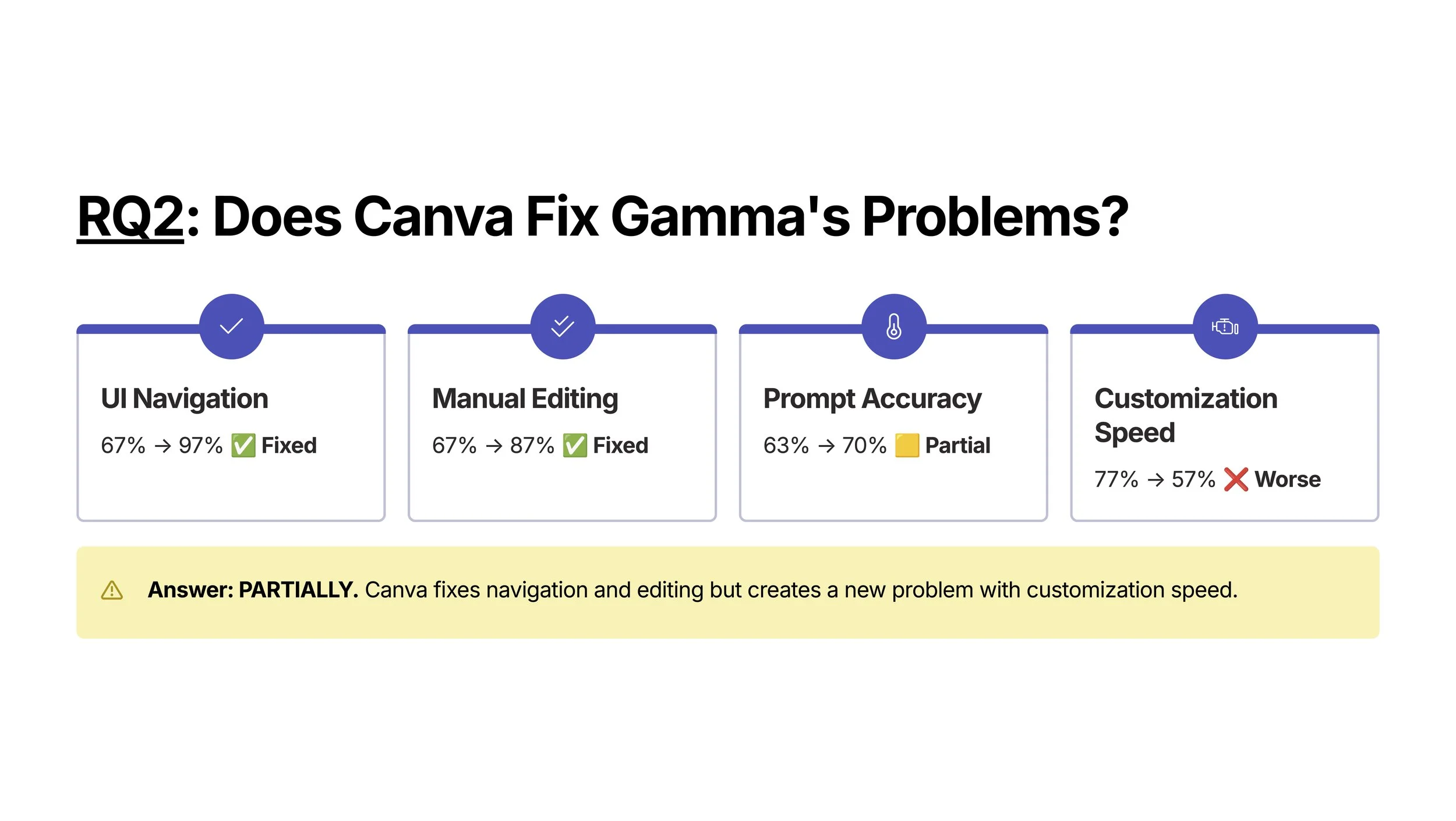
Do Canva’s new AI features fill in the gaps in Gamma’s User experience?
Step-By-Step:
#1 Create a Fictional Character Set for every participant to build a slide-deck presentation.
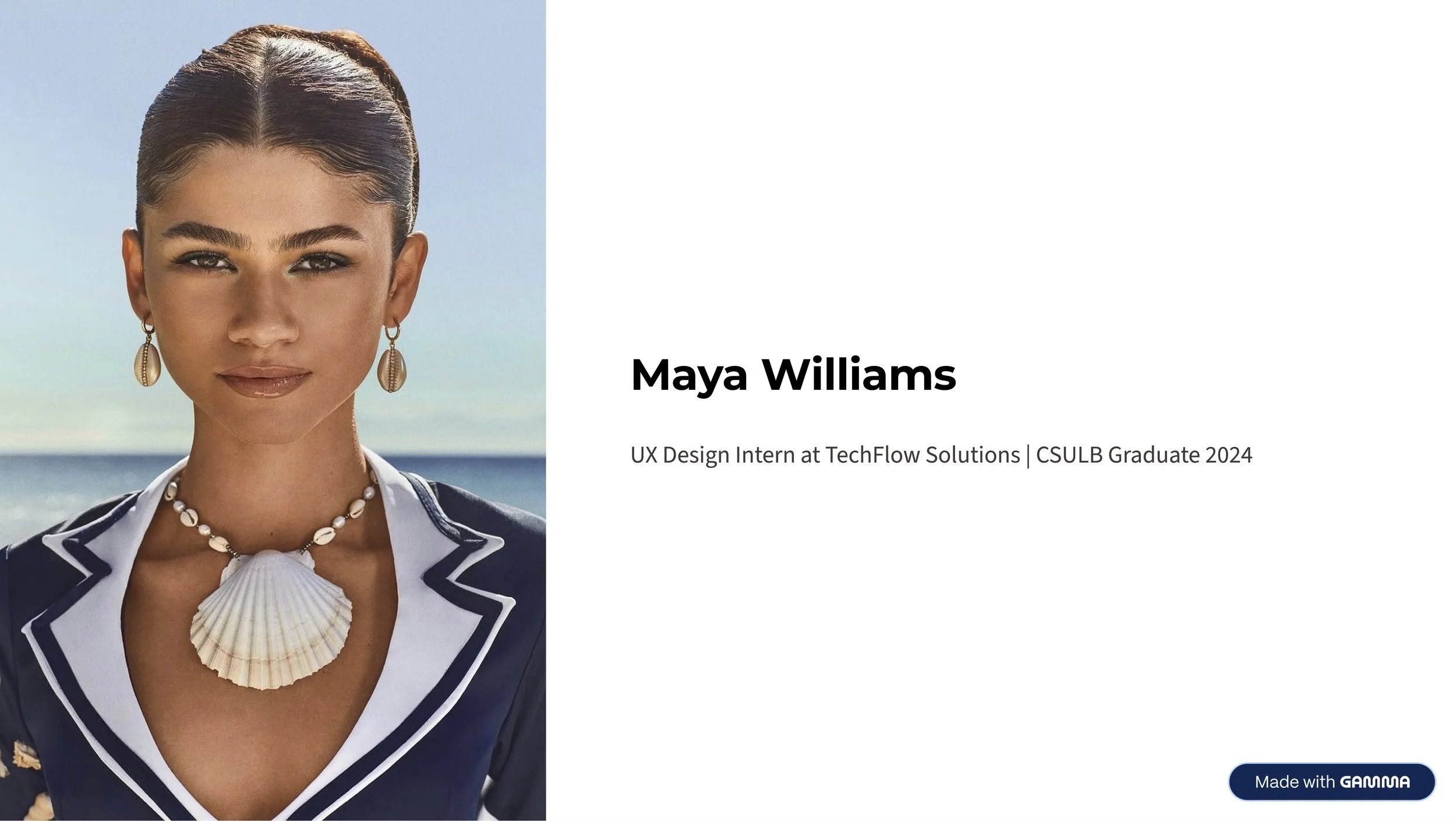
Users created a slide-deck presentation for Maya Williams, a recent college graduate who intends to present why she’s the best candidate for a role at Intuit (Example linked above). For her, she had her own photos and a sample resume to upload to Gamma.
A/B Tests: Gamma (a)
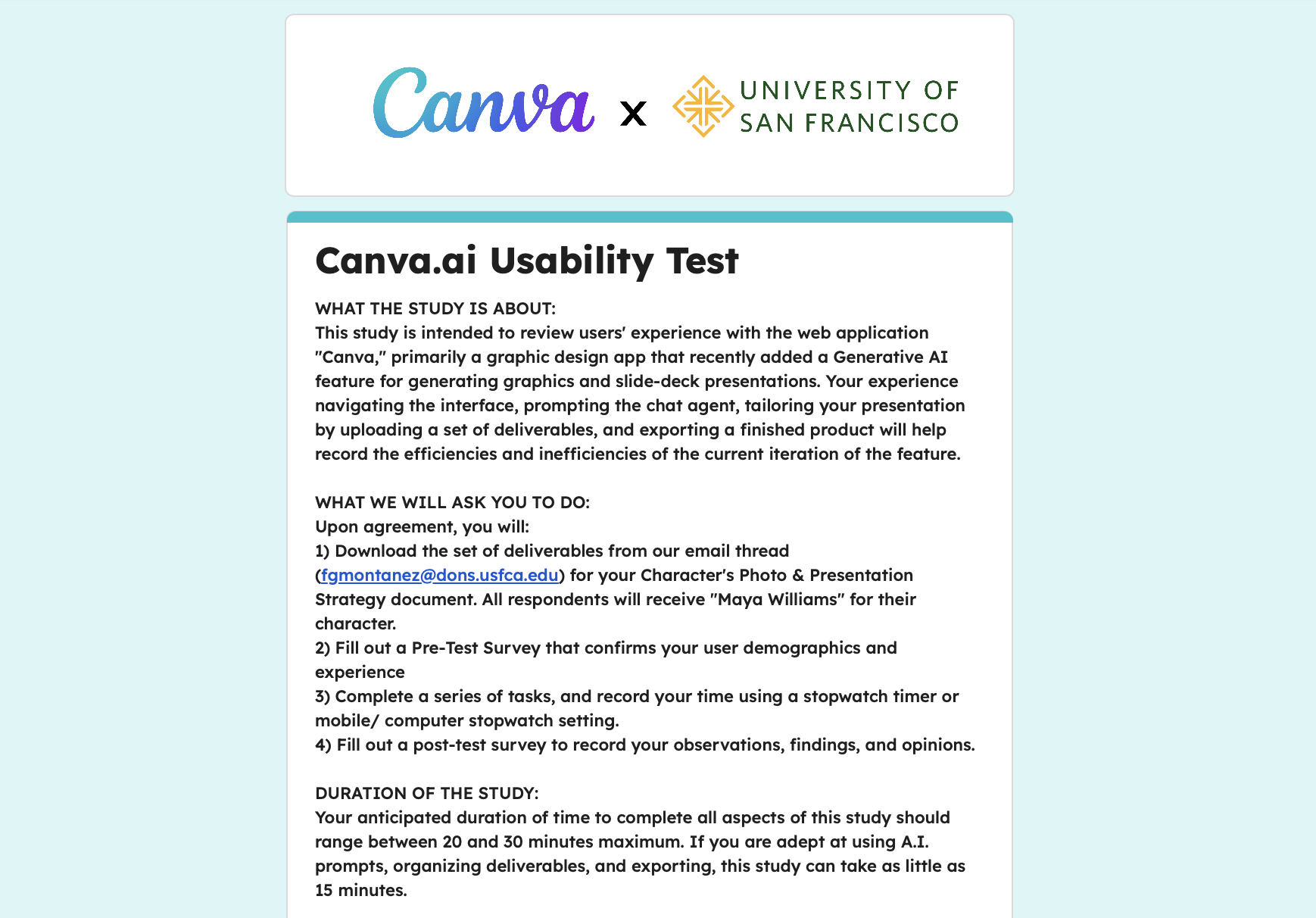
#2 Write the Google Form Survey with Instructions. Send it to study participants. Record their results.
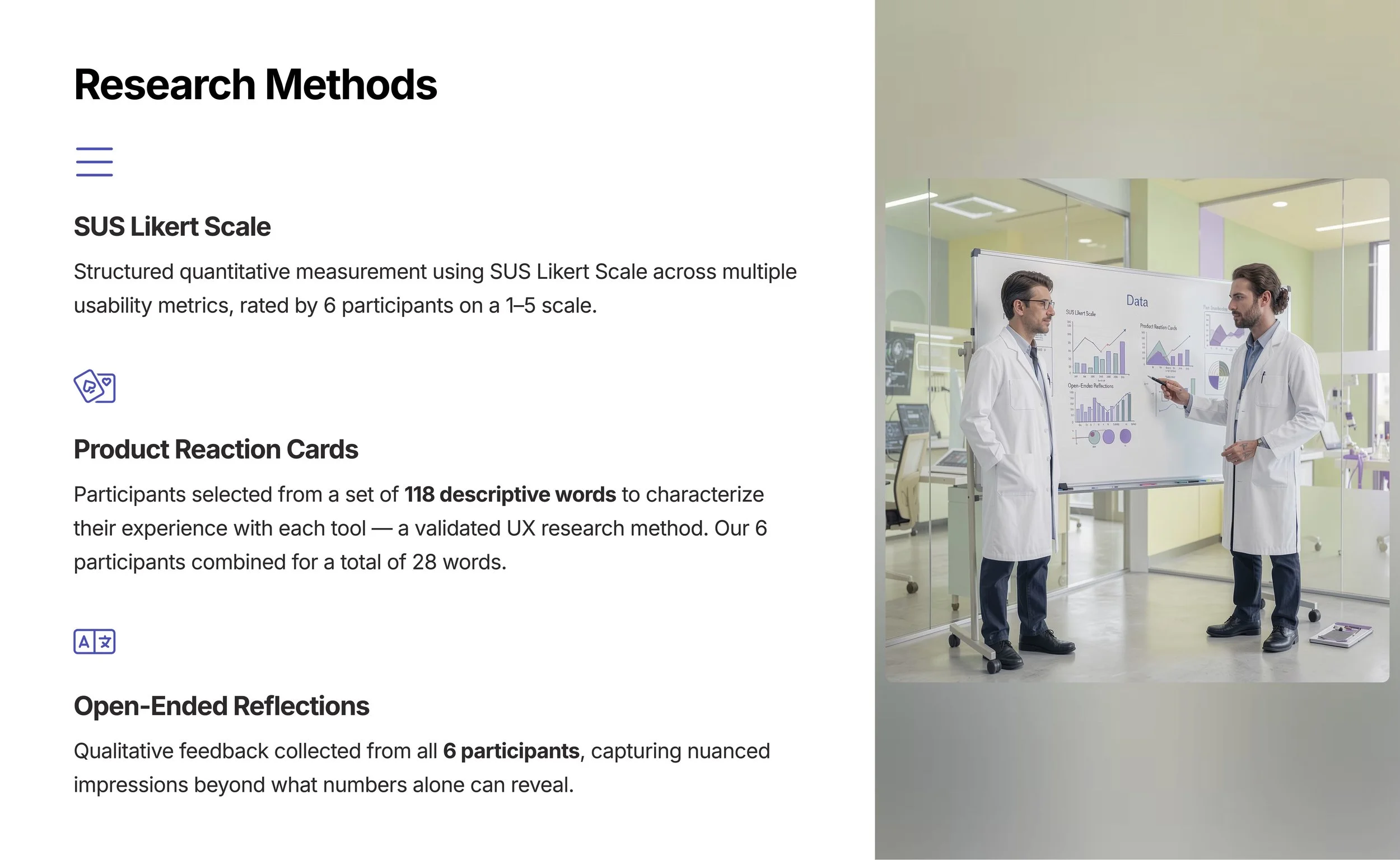
The survey requires only necessary information, not to brief and not too specific. After receiving submissions, I record the data in Excel for better understanding (Data is linked below in the IMRaD)
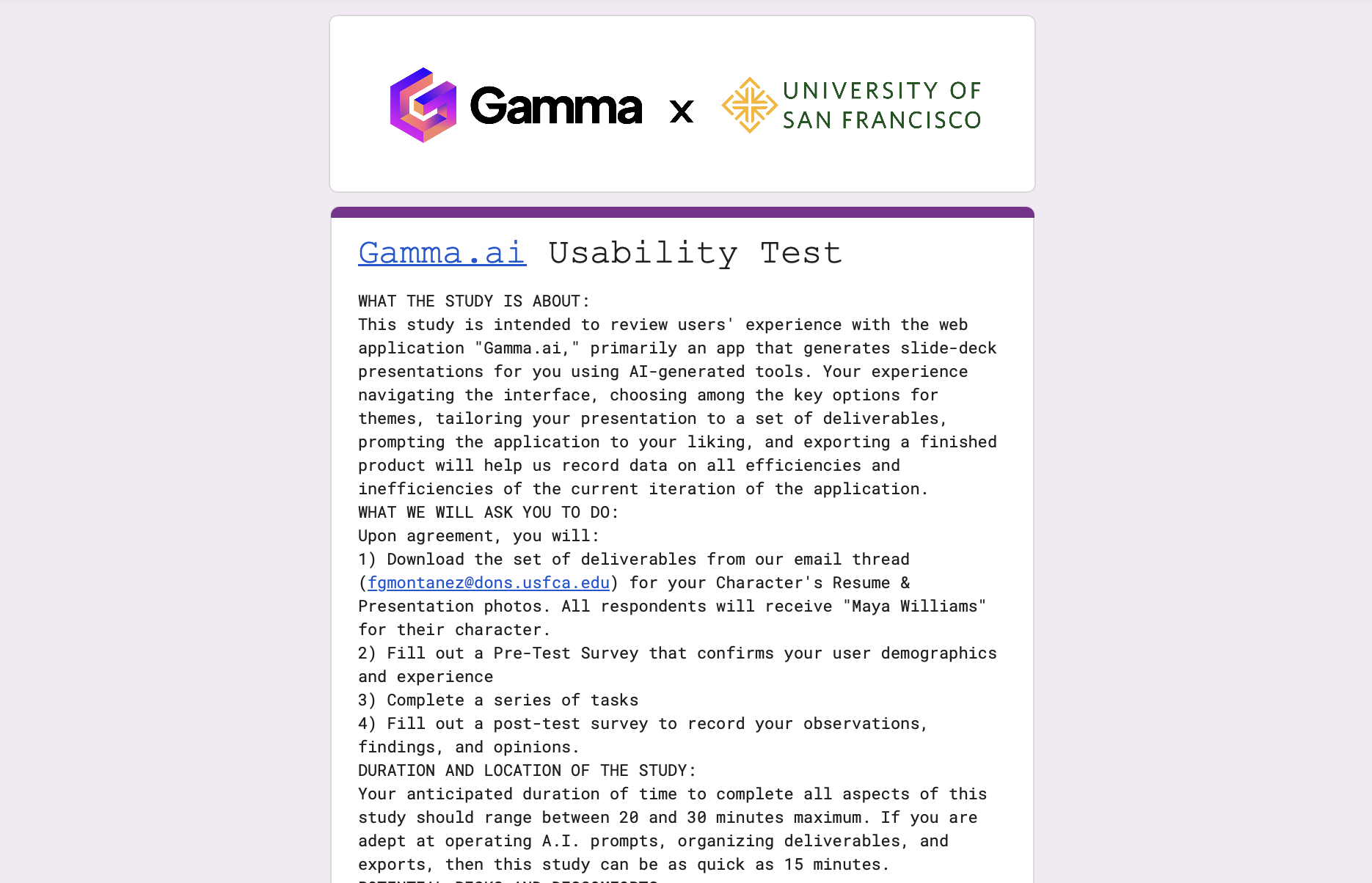
#2 Write the Google Form Survey with Instructions. Send it to study participants. Record their results, as similar to the A Test.
The survey requires only necessary information, not to brief and not too specific. After receiving submissions, I record the data in Excel for better understanding (Data is linked below in the IMRaD)
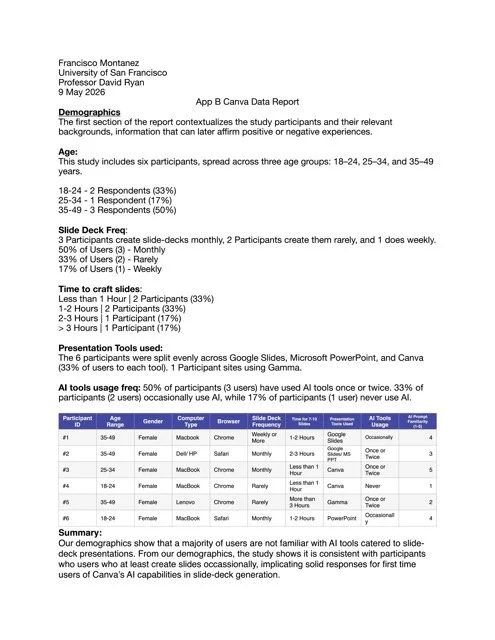
Through our UX Thesis, David Ryan introduces the fundamentals of research biases and practices. We also learn to assign quantitative values to qualitative data and synthesize our findings with broader product/ market implications through the organization of our IMRaD Thesis and Final Presentations.
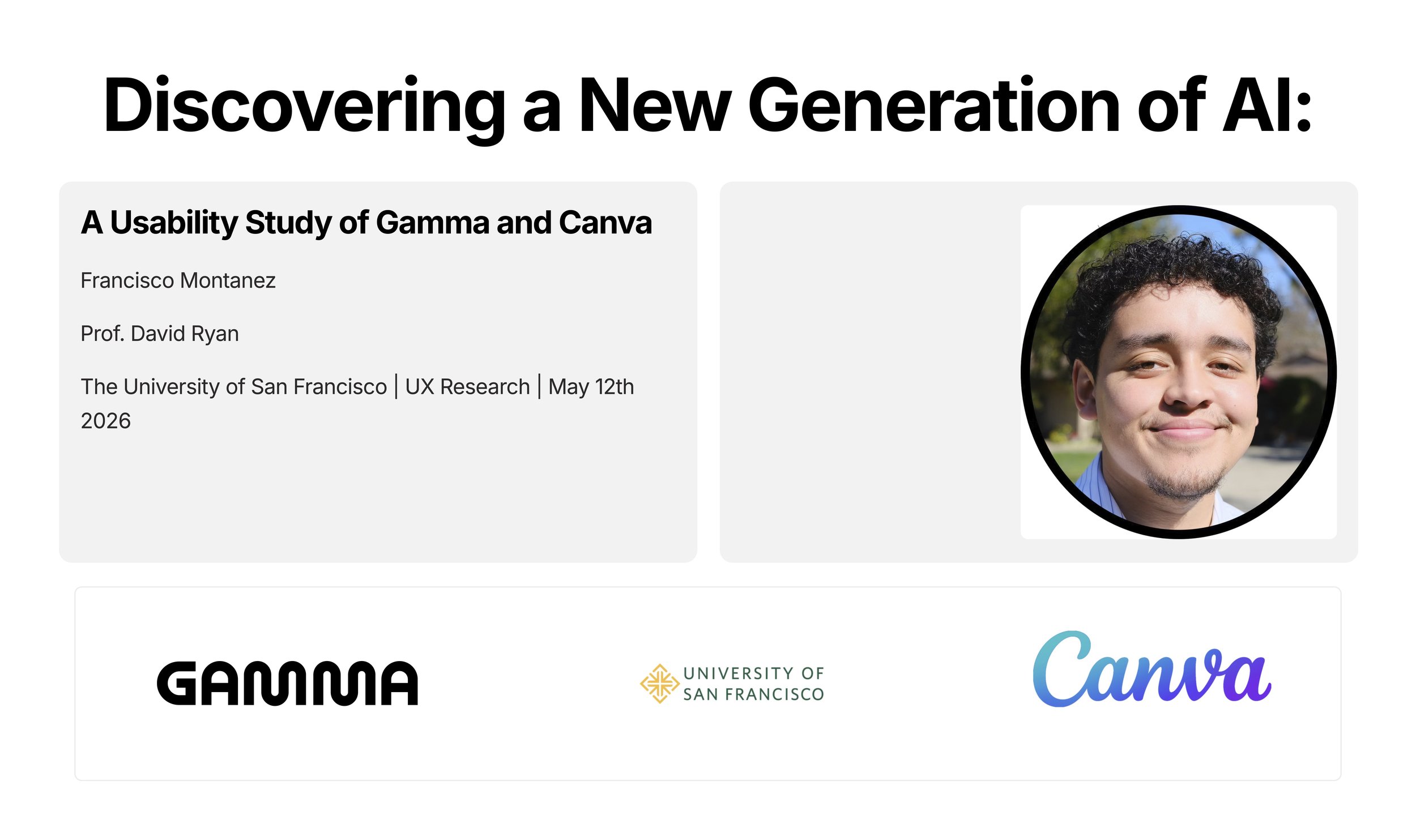
Discovering a New Generation of AI: A Usability Study of Gamma and Canva
A/B Tests: Canva (b)
#1 Use the Same Character with a new Prompt, similar instructions, but with Canva’s new generative AI tool.
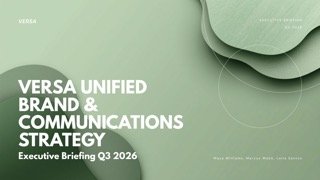
Maya Williams is now presenting a brand strategy for a fictional company. For her, she had photos, a character bio and a brand strategy report document to upload to Canva.
A/B Test: Data Synthesis
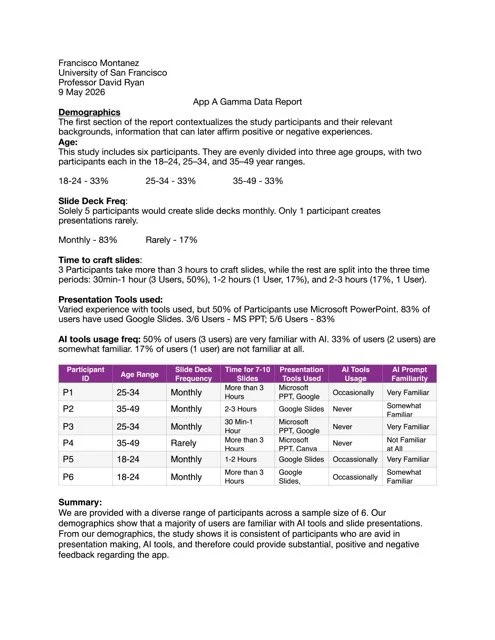
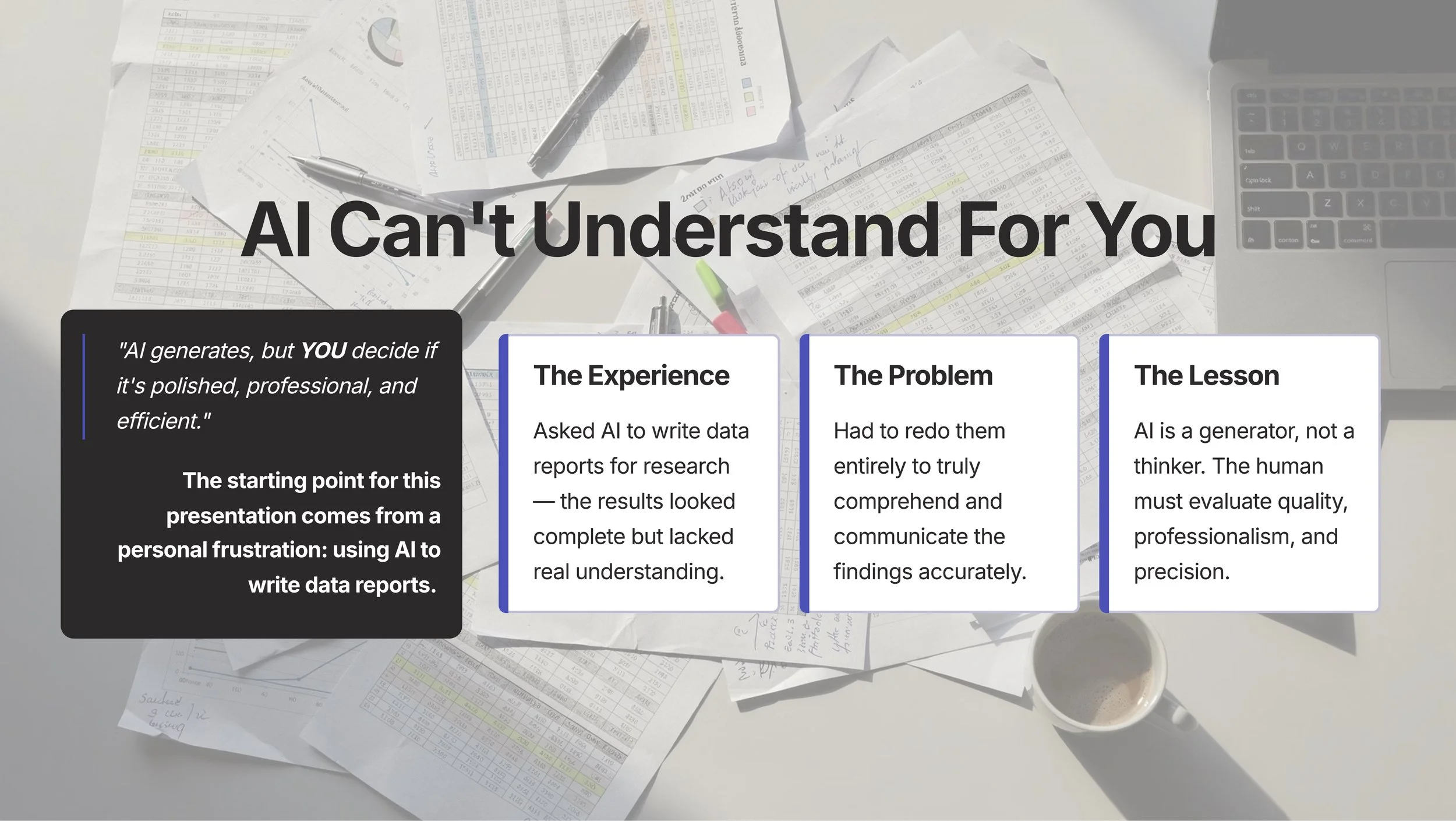
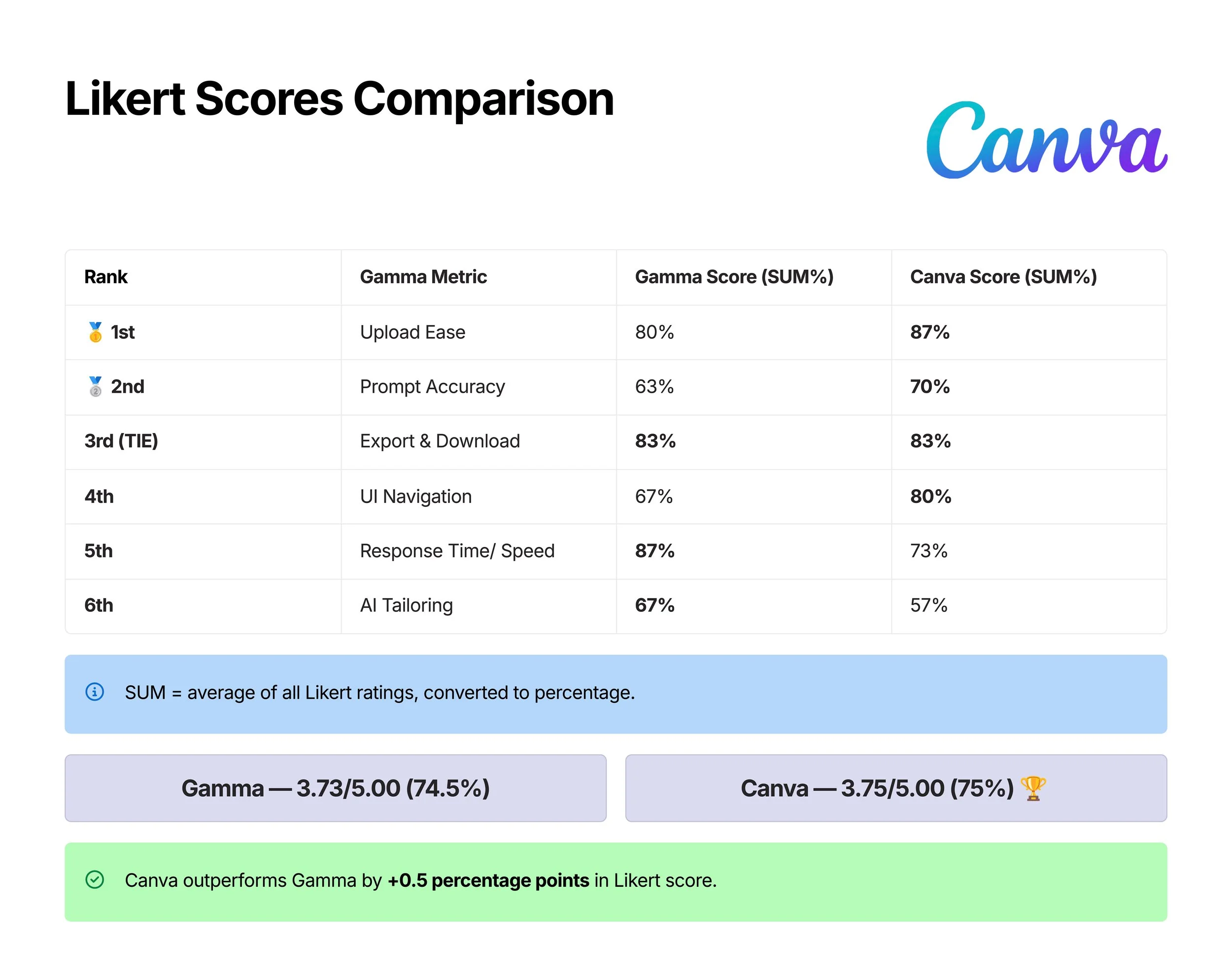
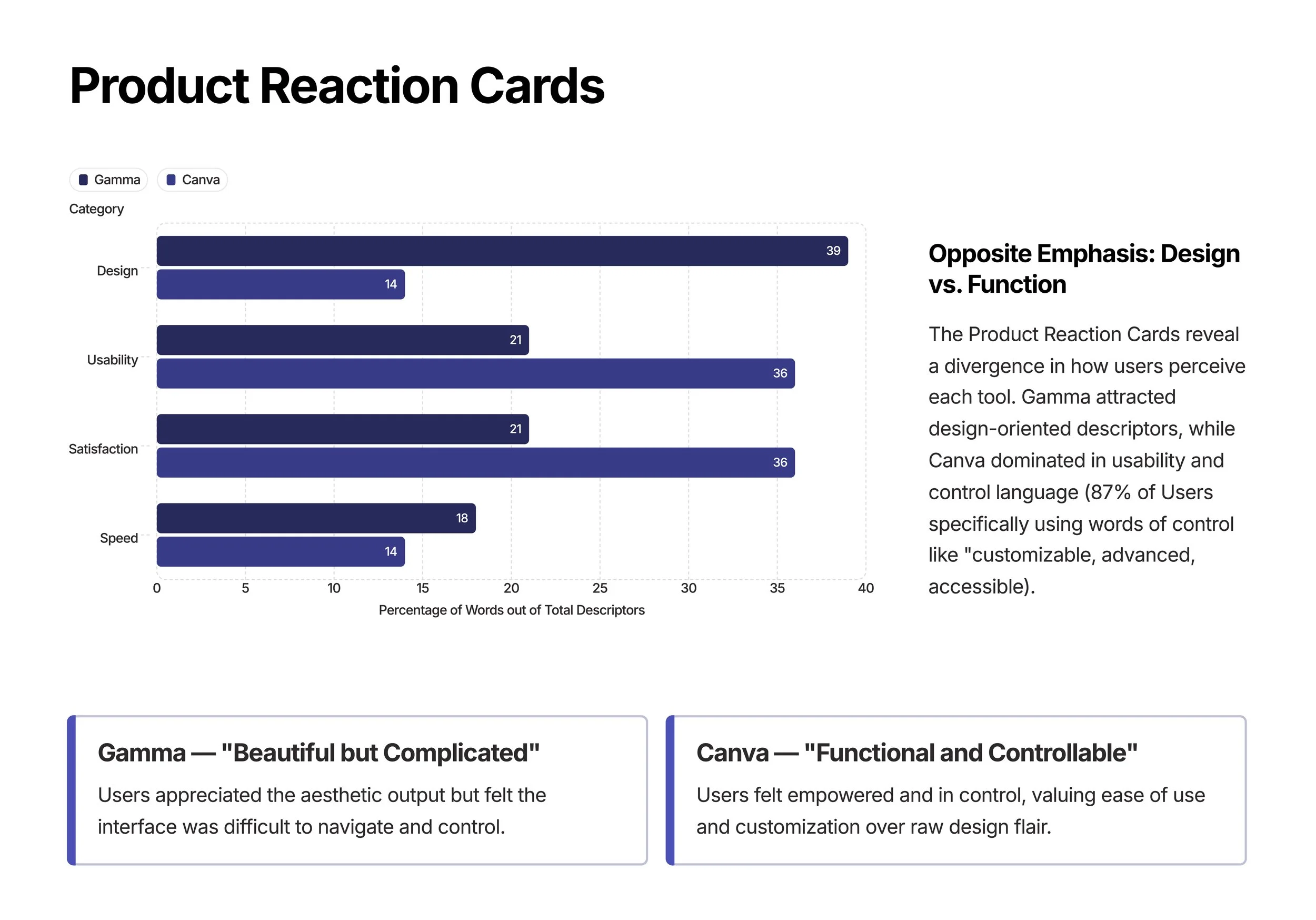
I crafted two separate data reports in the same format/ structure to be able to place them side by side and conclude results for the final analysis. You can view both data reports by clicking on their images.
A/B Test: Forming Conclusion, Results, and Producing Final Materials
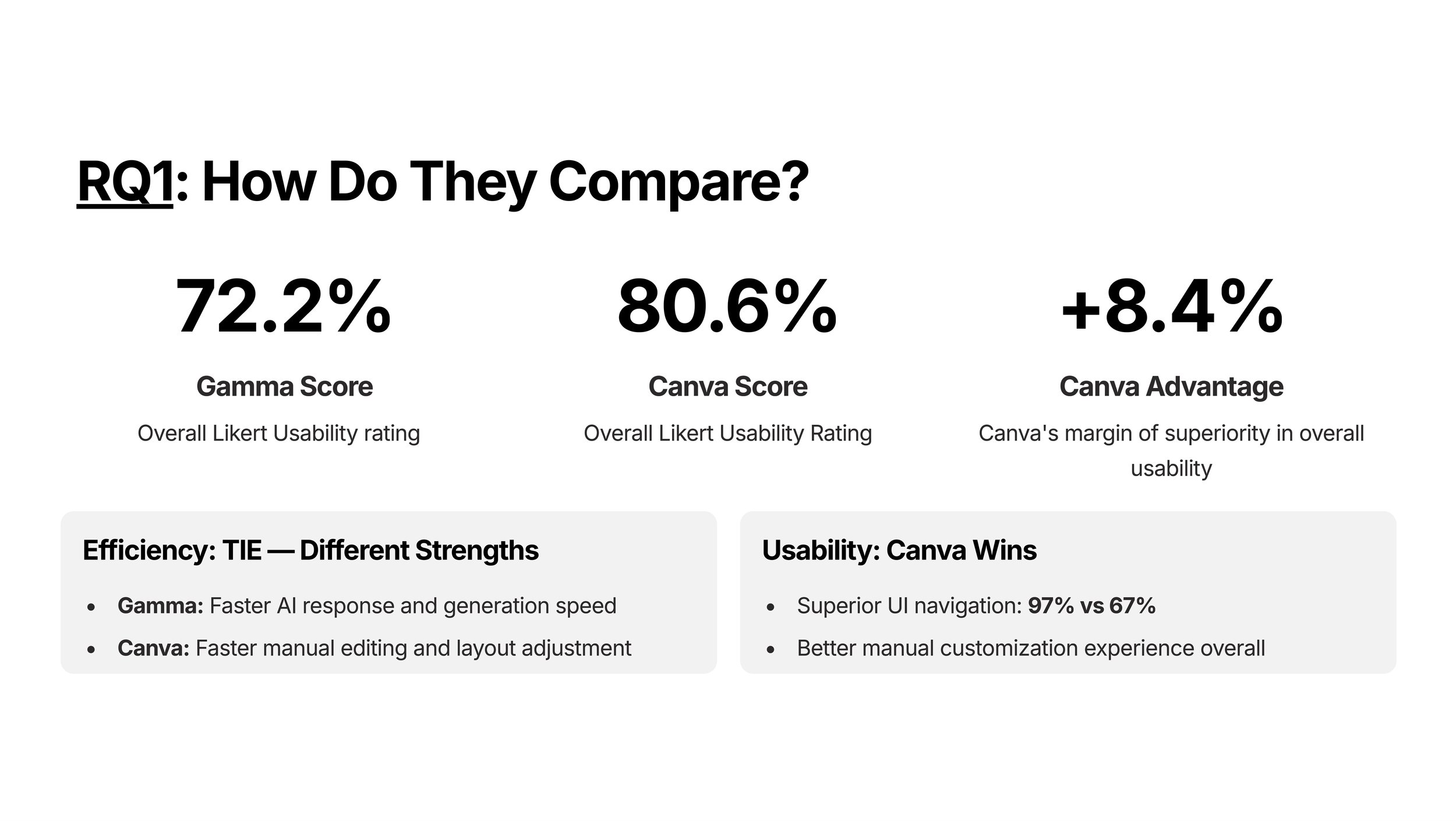
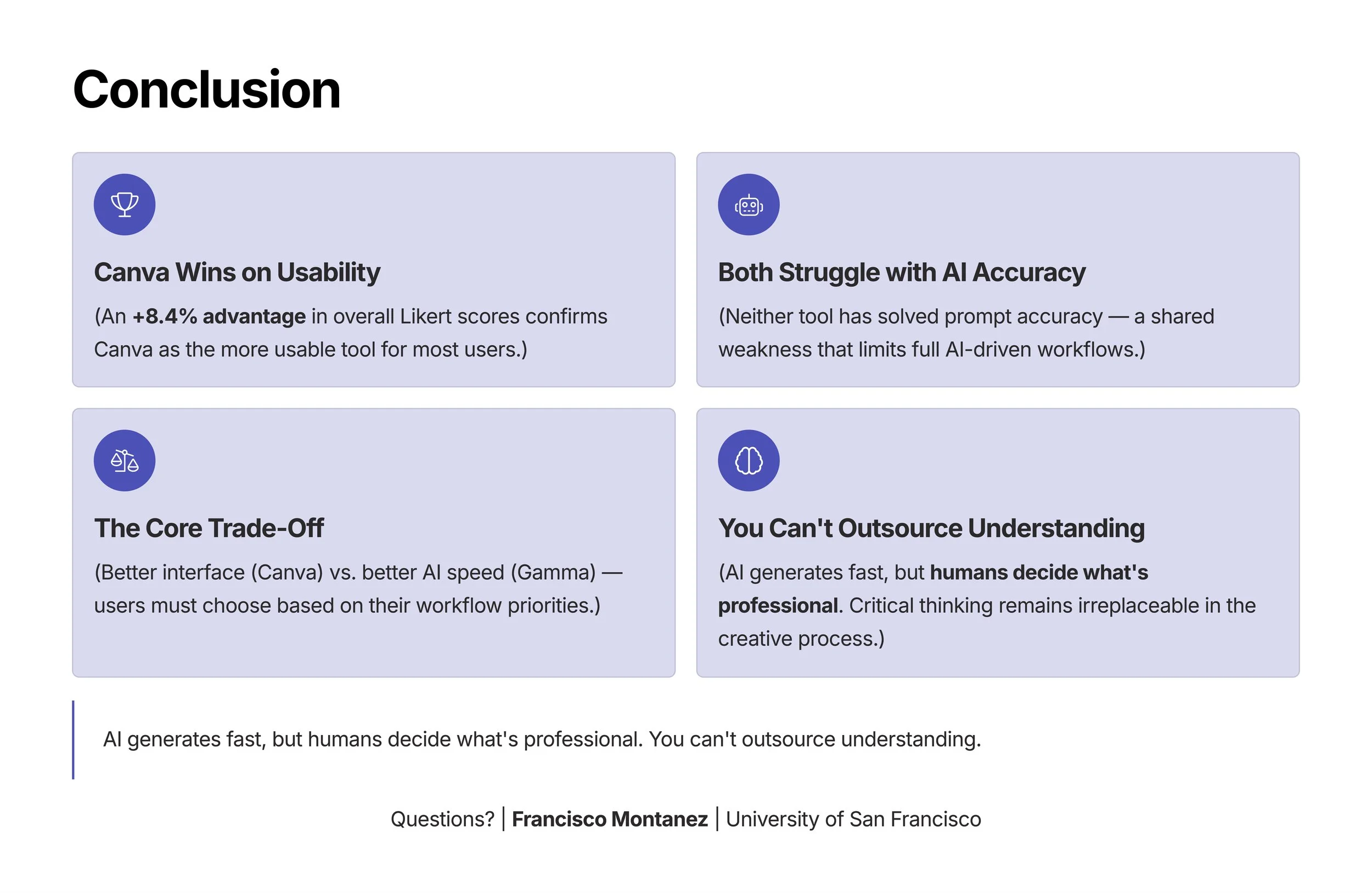
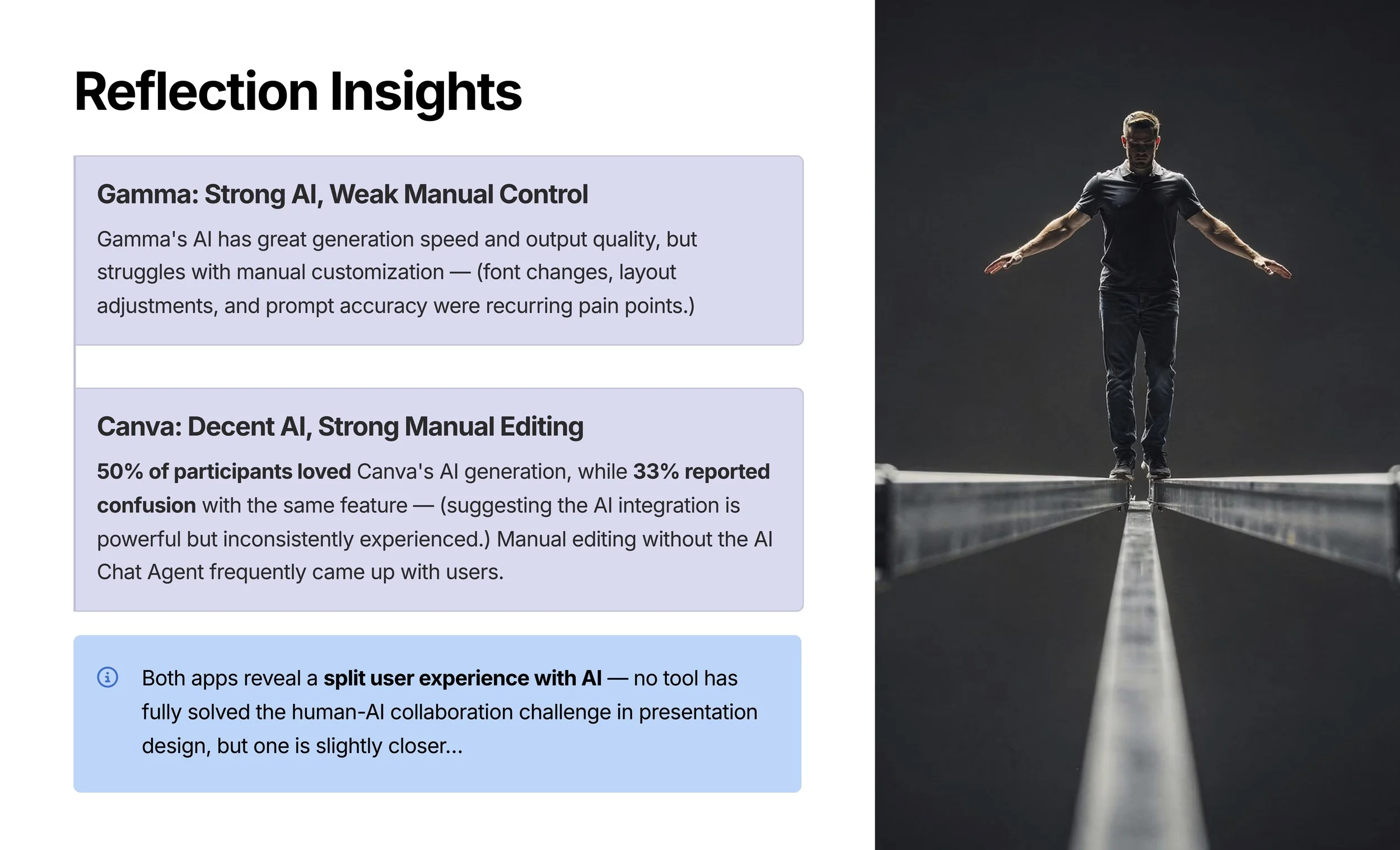
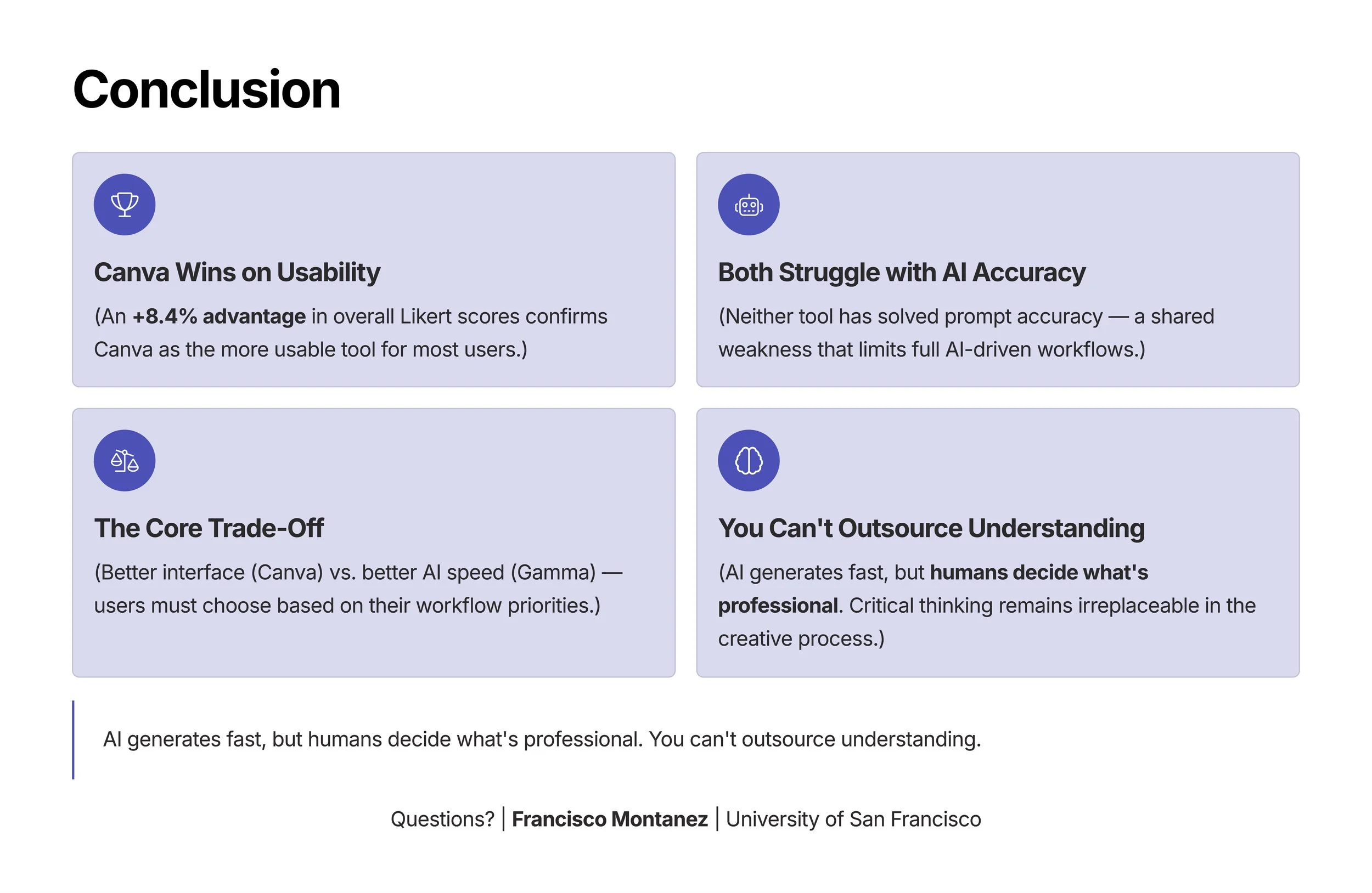
The results reveal that participants slightly prefer Canva AI over Gamma, with preferences and instances related to user familiarity and easy-to-navigate interfaces when manually editing presentations. I frame my own presentation to objectively compare and contrast both applications and their AI features. Below are my final deliverables, with accessible links to the final documents.
Thesis Presentation Slide Deck: Click to view Full Presentation
Conclusion
I didn’t expect to gain so much insight from UX research or B2B products in general. Through this course, I learned how to critically analyze the user experience of nearly any technical interface used by the average professional. At my next company, I can see myself contributing by onboarding new products and software and evaluating them against the needs, thanks to the insights from David Ryan and his UX research course.
I plan not to let this skill fall behind, intending to critique, analyze, and A/B test other social & internal software for Communications professionals.
Key Takeaways
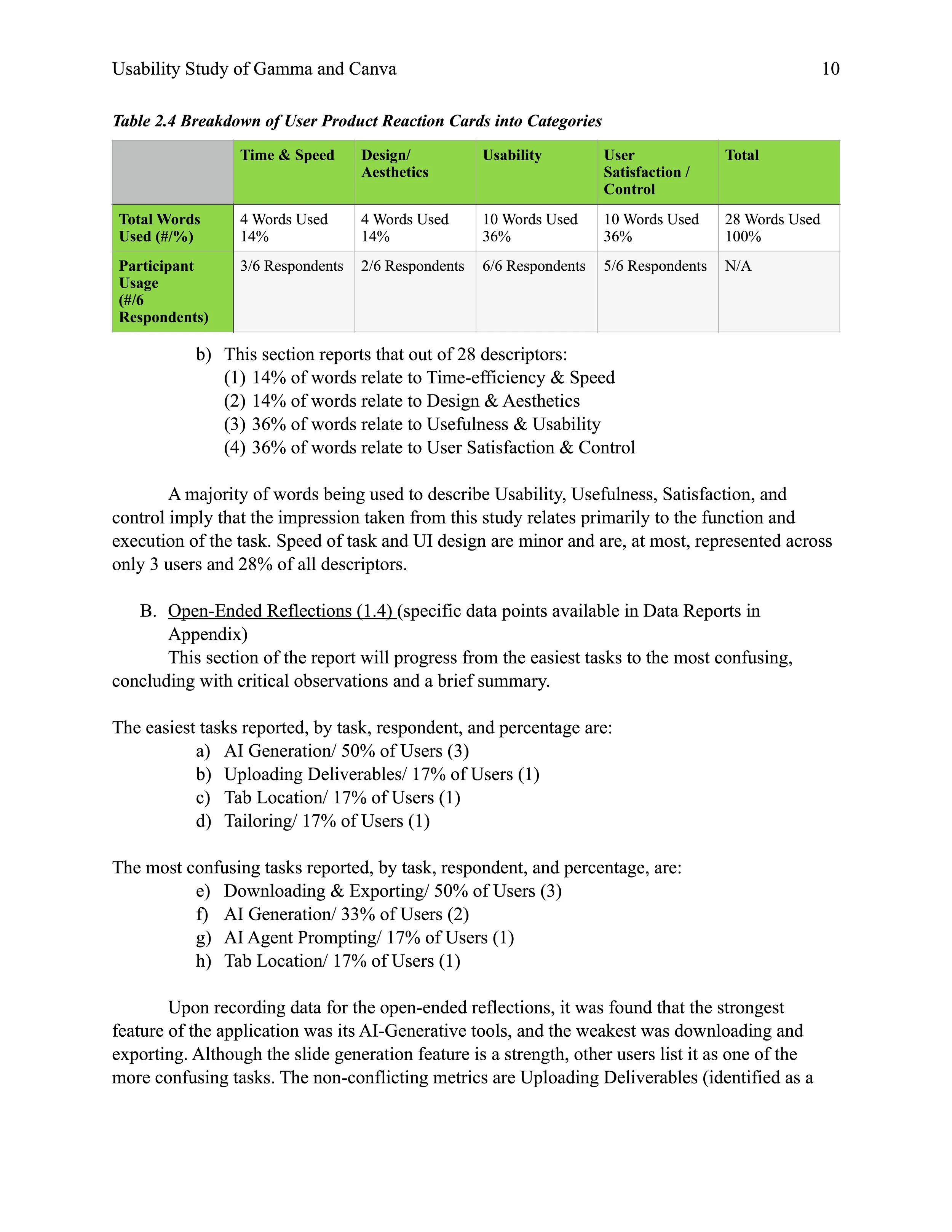
Data reports, Left-Right Comparison Tables:
IMRaD Paper: Click to View the Complete Study